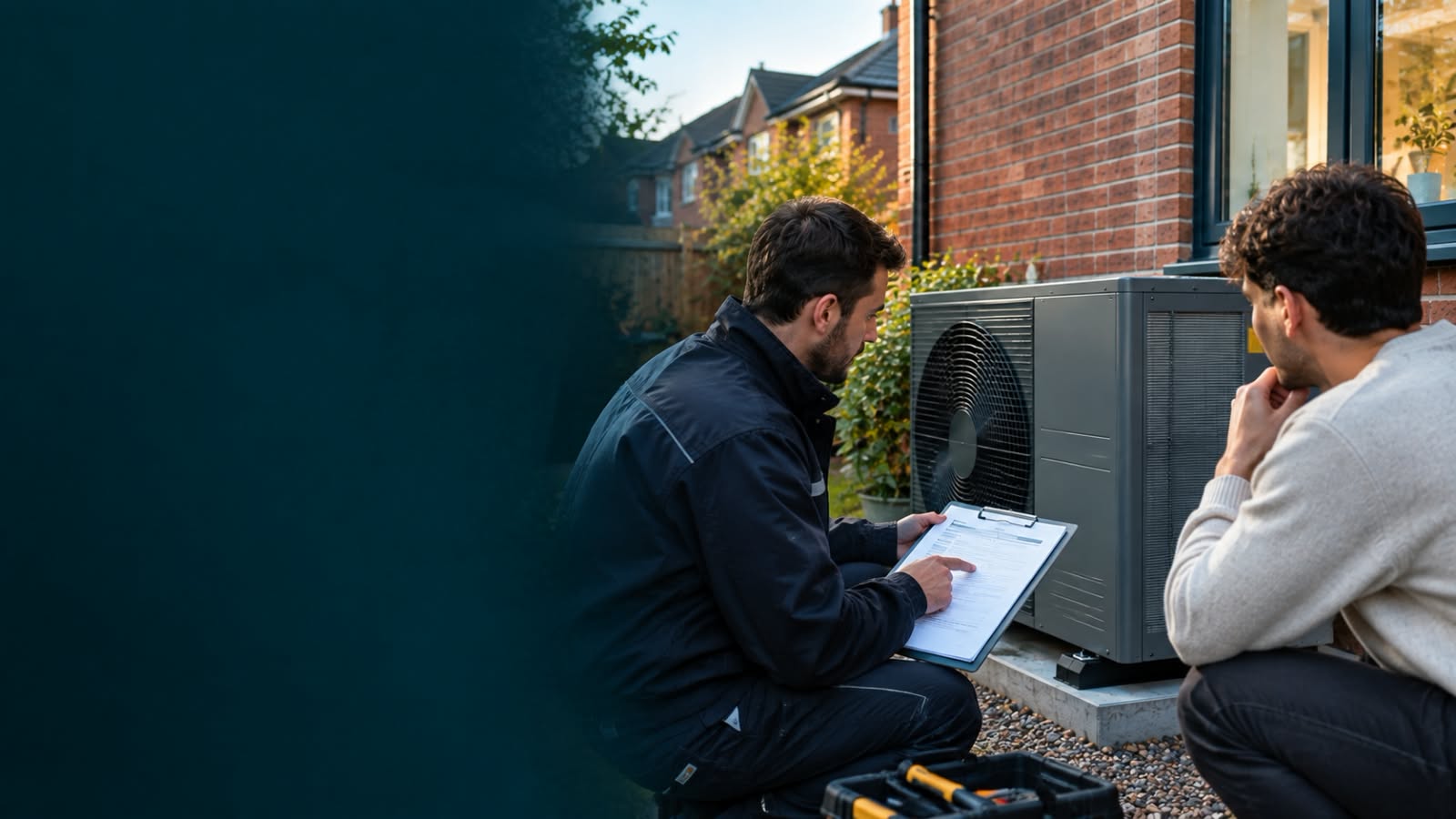
An air source heat pump typically costs around £12,000 to install in the UK in 2026, before any grant. The Energy Saving Trust gives a typical figure of about £12,000, and the government’s latest Boiler Upgrade Scheme data shows a median installed price of £12,908 for April to June 2026. In England and Wales, the £7,500 grant brings that down to roughly £5,400 for a typical home. Your own quote could land well above or below that, and the rest of this guide explains why.
Last updated: 15 October 2026. Prices and grant rules change, so always check the official sources linked at the end. Related guides: how to compare installer quotes, hidden costs and the payback calculator.
The short answer: what the numbers say
| Measure | Figure |
|---|---|
| Typical installation cost (Energy Saving Trust) | About £12,000 |
| Median installed cost, Boiler Upgrade Scheme, Apr to Jun 2026 | £12,908 (before the grant is deducted) |
| Middle half of installations (analysis of the government data) | Roughly £11,100 to £15,600 |
| Cost after the £7,500 grant, on the median | About £5,400 |
| Cost after the £9,000 oil and LPG grant, on the median | About £3,900 |
| Air-to-air heat pump, one room (Energy Saving Trust) | About £1,900 |
| Air-to-air heat pump, three-bedroom semi (Energy Saving Trust) | About £3,700 |
The median is the middle price, so half of installations cost more and half cost less. Treat it as a guide to what is normal, not a quote for your home.
What is included in the price?
A complete quote for an air-to-water heat pump (the type that heats your radiators and your hot water) should cover the outdoor unit, controls, pipework, the electrical connection, commissioning, and usually a hot water cylinder. It may also include radiator upgrades. Because every home needs a system designed around it, two quotes for the same house can be structured quite differently, so ask for a line-by-line breakdown.
What pushes the price up or down
- Heat pump size. Bigger or draughtier homes need more output, and larger units cost more. Analysts at Nesta note that the shift towards smaller installations is part of the reason median prices have fallen since the scheme began.
- Radiators and pipework. Heat pumps run at lower water temperatures than gas boilers, so some homes need larger radiators or pipe changes to stay warm.
- Hot water cylinder. If you have no cylinder, or yours is too small or old, a new one adds to the bill.
- Electrical work. Some homes need a consumer unit upgrade or extra cabling for the new unit.
- Insulation and heat loss. A well-insulated home needs a smaller, cheaper system than a leaky one of the same size.
- Installer and region. Labour rates and how busy installers are vary across the UK.
How much does the Boiler Upgrade Scheme take off?
In England and Wales, the Boiler Upgrade Scheme currently pays £7,500 towards an air-to-water or ground source heat pump. From 21 July 2026 to 31 March 2027 there is a temporary uplift to £9,000 for eligible off-gas-grid homes replacing oil or LPG heating. Air-to-air heat pumps, added to the scheme on 28 April 2026, qualify for £2,500.
You do not pay the grant upfront and claim it back. Your MCS-certified installer applies on your behalf, and the grant is taken off your invoice. A few basics to know:
- The heat pump must replace an existing fossil fuel or electric heating system.
- New-build homes and social housing are not eligible, although self-build properties can be.
- You cannot combine it with other public funding for the same heat pump.
- Hybrid systems that keep the gas boiler as the main heat source do not qualify.
Scotland has its own support, with a grant and an interest-free loan through Home Energy Scotland, which we explain in our guide to heat pump grants in Scotland. In Northern Ireland there is currently no dedicated heat pump grant, according to the Energy Saving Trust. Ireland has a separate scheme run by SEAI, covered in our SEAI grant guide. For the England and Wales rules in full, see who qualifies for the Boiler Upgrade Scheme.
VAT: a deadline worth knowing
The installation of heat pumps in homes is currently zero-rated for VAT. According to HMRC’s VAT Notice 708/6, that relief runs to 31 March 2027, after which the rate reverts to 5%. If you are planning an installation, the timing of your project can make a difference of several hundred pounds, so ask your installer which rate will apply to your job.
Are heat pumps getting cheaper?
Slowly. Nesta’s analysis of the government data finds that the median installation cost has fallen by about 11% in real terms since the scheme launched in 2022, but it was broadly flat last year. Nobody can promise a big drop soon, and the VAT change in April 2027 pushes in the other direction.
What about running costs?
The purchase price is only half the picture. For a typical three-bedroom semi replacing gas on a standard tariff, the Energy Saving Trust estimates the result ranges from about £110 a year more to about £220 a year less, depending on how efficient your old boiler was. On a heat pump tariff, with the gas account closed, its estimate is a saving of roughly £204 to £530 a year. Your result depends on your home, your tariff and how the system is set up.
How to get an accurate price for your home
- Ask at least three MCS-certified installers for a quote. You can search the MCS installer database at mcscertified.com.
- Make sure each quote follows a proper survey and a room-by-room heat loss calculation, not a rule of thumb.
- Ask for a written breakdown: unit, cylinder, radiators, controls, electrical work, VAT, and the grant shown as a deduction.
- Compare the quotes line by line, not just by the final total.
From headline price to what you pay: a Kilowiq worked example
The table starts from the median installed price of £12,908 and shows how the grant, the off-gas uplift and the VAT change at 1 April 2027 move the amount you pay. The last row uses the “middle half” range from the government data to show how far a real quote can sit from the median.
| Scenario | Price before grant | After £7,500 grant | After £9,000 grant |
|---|---|---|---|
| Median job, VAT at 0% | £12,908 | £5,408 | £3,908 |
| Same job with 5% VAT added (illustration for work after 31 March 2027) | £13,553 | £6,053 | £4,553 |
| Lower end of the middle half of installs | £11,100 | £3,600 | £2,100 |
| Upper end of the middle half of installs | £15,600 | £8,100 | £6,600 |
The 5% row is our own illustration. It assumes the median price was charged at 0% VAT and that the same pre-VAT price would carry 5% after the relief ends, which adds about £645. Your installer’s pricing may differ. The £9,000 column applies only to eligible off-gas homes.
Three tips from Kilowiq
- Put your own quote in the first column and check where it sits against the range above. A quote far outside it is worth a question, not a refusal.
- Ask for the price both before and after the grant, so you can see the grant is taken off and not added back in extras.
- If your job could run past 31 March 2027, ask the installer in writing which VAT rate they will charge.
Frequently asked questions
Is a heat pump more expensive to install than a gas boiler?
Yes. Installation usually costs considerably more than a like-for-like gas boiler before grants, which is why the Boiler Upgrade Scheme exists.
Does the grant cover the whole cost?
Not usually. On the median installation you would still pay roughly £5,400, or about £3,900 with the oil and LPG uplift. Smaller, simpler jobs can come out much lower.
Is an air-to-air heat pump a cheaper alternative?
It costs far less to install, around £1,900 for one room and £3,700 for a three-bedroom semi according to the Energy Saving Trust, and qualifies for a £2,500 grant. But it heats the air rather than your radiators and does not provide hot water, so it suits a different set of homes.
Should I wait for prices to fall?
There is no guarantee they will. The temporary £9,000 grant ends on 31 March 2027, and VAT is due to rise from 0% to 5% on 1 April 2027, so waiting could cost you more, not less.