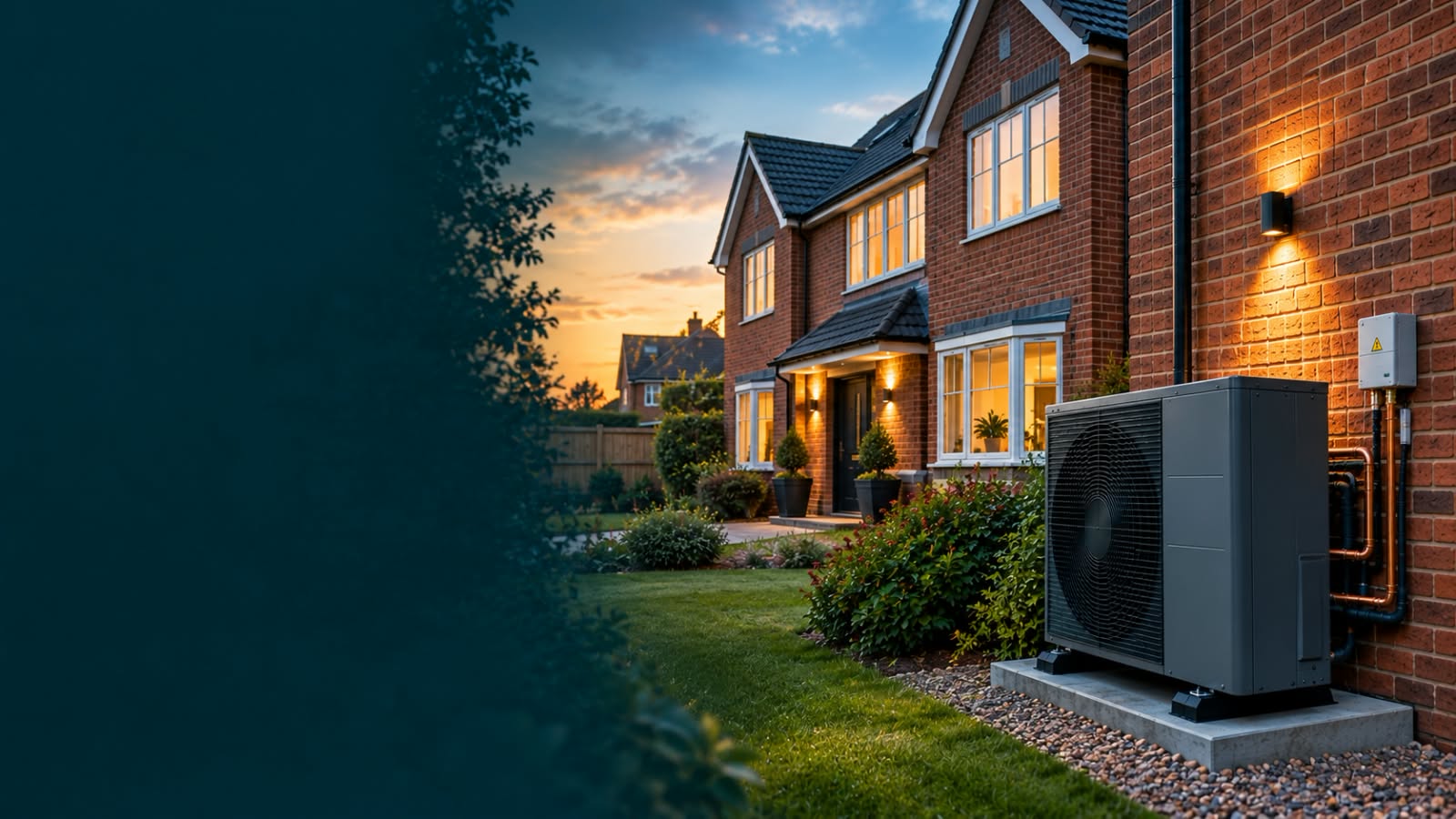
A heat pump for a four-bedroom detached house usually costs more than one for a semi, because detached homes lose more heat and often need a larger system. Government Boiler Upgrade Scheme data, as reported in third-party analyses, puts the median installed price for systems of 12 to 16 kW at around £15,400 to £15,500 before any grant. In England and Wales, the £7,500 grant brings that down to roughly £7,900 to £8,000. A well-insulated detached house that only needs a smaller unit can cost noticeably less.
Last updated: 15 October 2026. Prices and grant rules change, so check the official sources at the end of this guide. Related guides: how to compare installer quotes, radiator upgrade costs and hot water cylinders.
The numbers at a glance
| Measure | Figure (rounded) |
|---|---|
| Median installed cost, all air source heat pumps, Apr to Jun 2026 | £12,908 |
| Median installed cost, 12 to 14 kW systems (2025/26) | About £15,400 |
| Median installed cost, 14 to 16 kW systems (2025/26) | About £15,500 |
| After the £7,500 grant, on those two medians | About £7,900 to £8,000 |
| After the £9,000 oil and LPG grant, on those two medians | About £6,400 to £6,500 |
These are the price before the grant is taken off, and they include the heat pump, labour and VAT. The capacity-band figures are taken from third-party analyses of the government statistics. We could not find a reliable published figure for the 10 to 12 kW band, so we have not guessed one. For how a smaller semi compares, see our 3-bedroom semi guide, and for the national picture see the UK cost guide.
Why detached houses cost more
A detached house has walls exposed to the outside on every side, so it loses more heat than a semi of a similar size. More heat loss means a bigger heat pump, and bigger units cost more. Larger homes also tend to have more rooms and radiators, longer pipe runs and bigger hot water demand, all of which can add to the bill.
Nesta’s analysis of the government data points the same way. It found that the median price has fallen since the scheme began, partly because installations have shifted towards smaller systems. Larger systems are still the more expensive end of the market.
What size does a 4-bed detached need?
Online guides often suggest something in the region of 10 to 14 kW, but the honest answer is that it depends on your home. Insulation, window quality, how airtight the house is and how warm you like it all change the result. A well-insulated four-bed detached can get by with a much smaller unit than a draughty one.
The reliable way to find your size is a room-by-room heat loss calculation by a qualified installer. Do not accept a size chosen by bedroom count alone. Insulation work such as loft and wall insulation can reduce the size you need, which can lower the price of the heat pump itself.
What can add to the cost
- Radiators. Heat pumps run at lower water temperatures, so some rooms may need larger radiators. A bigger house simply has more rooms where this could apply.
- Hot water cylinder. Larger households need a bigger cylinder, and it needs somewhere to go.
- Pipework and electrics. Longer distances between the outdoor unit and the cylinder or radiators mean more pipework, and some homes need electrical upgrades.
- Where the outdoor unit goes. Detached houses usually have more space around them, which can make siting easier than on a semi.
Grant and VAT
In England and Wales, the Boiler Upgrade Scheme pays £7,500 towards an air-to-water heat pump. Detached homes are often rural, and eligible off-gas homes replacing oil or LPG heating can get £9,000 on applications from 21 July 2026 to 31 March 2027. Your MCS-certified installer applies for you and the grant comes off your invoice. Installing a heat pump is currently zero-rated for VAT until 31 March 2027, after which the rate reverts to 5%, which is a bigger sum on a larger job.
How to compare quotes for a detached house
- Ask for the heat loss calculation and check that the unit size matches it.
- Check the cylinder size and how many radiators are being replaced.
- Make sure the grant appears as a deduction and the VAT rate is stated.
- Get at least three quotes from MCS-certified installers and compare them line by line.
Semi or detached: what the bigger house adds, a Kilowiq worked example
The table puts the typical semi size next to the sizes a 4-bedroom detached house often ends up with, using the same government medians.
| Size band | Median before grant | After £7,500 | After £9,000 (off-gas) |
|---|---|---|---|
| 8 to 10 kW (typical semi) | £12,700 | £5,200 | £3,700 |
| 12 to 14 kW | £15,400 | £7,900 | £6,400 |
| 14 to 16 kW | £15,500 | £8,000 | £6,500 |
Moving up from the semi size to the larger bands adds about £2,700 to £2,800 to the median price. For scale, our hidden costs guide reports loft insulation top-ups at around £600 and cavity wall insulation at around £2,200, about £2,800 together. That is not a promise that insulation will move your house down a size band, because it depends on your own heat loss. It does show that insulation spending and the price of a bigger unit are of a similar size, which is worth asking your installer about.
Three tips from Kilowiq
- Ask for the heat loss calculation twice: as the house is now, and after the insulation you are considering.
- If the second calculation gives a smaller unit, ask for a quote at that size so you can compare.
- Do not pick the unit size from the number of bedrooms. A well-insulated detached house can need less than a leaky one.
Frequently asked questions
How much does a heat pump cost for a 4-bed detached house after the grant?
On the government’s median prices for larger systems, roughly £7,900 to £8,000 with the £7,500 grant. A well-insulated house needing a smaller unit could pay less.
Is a ground source heat pump a better choice for a detached house?
It can suit homes with a large garden, but it costs considerably more to install. Our ground source heat pump cost guide compares borehole and trench prices.
Will insulating first save money?
It can. Reducing heat loss can mean you need a smaller heat pump, and a smaller heat pump generally costs less. Ask your installer how your heat loss figures would change.